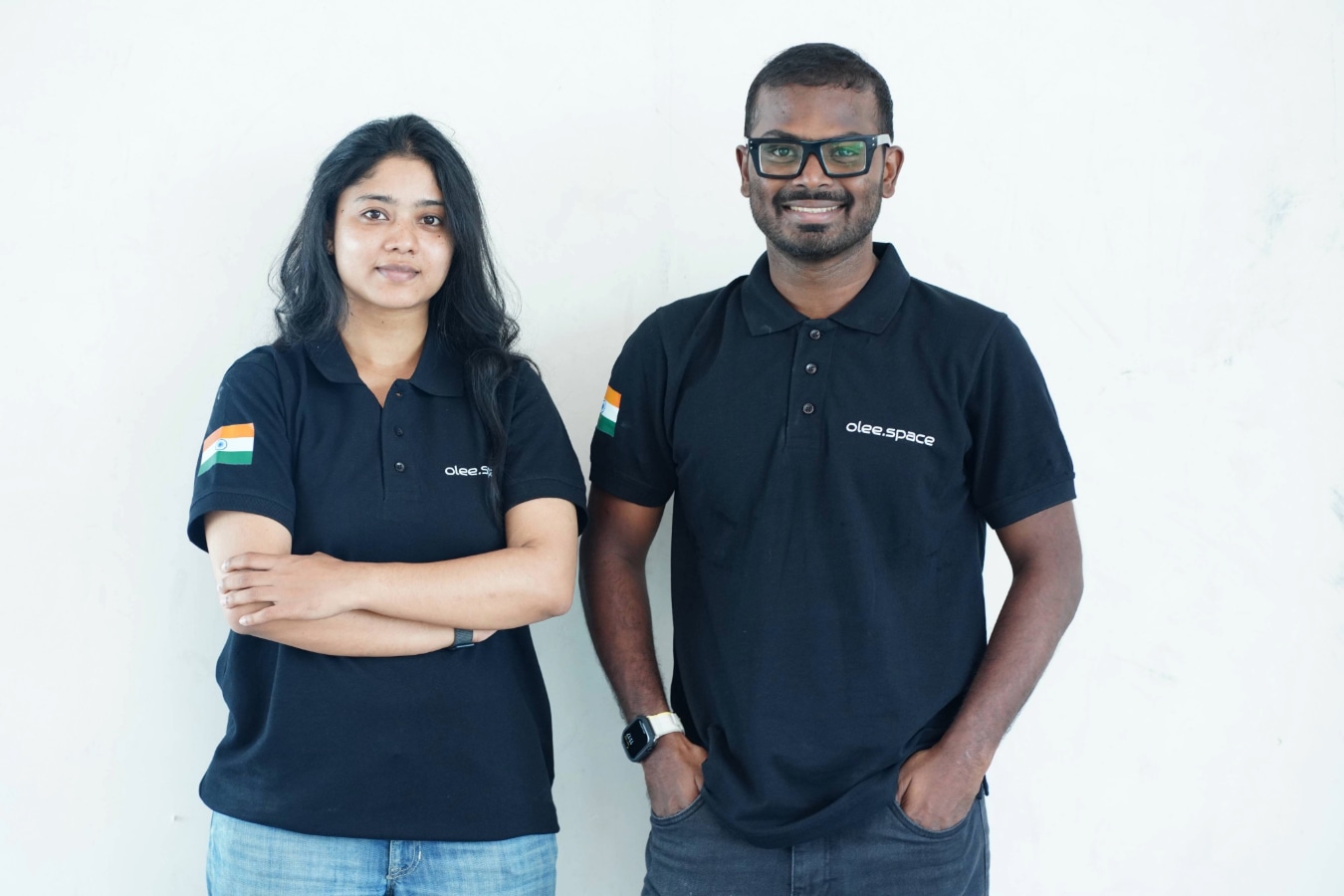
James Solomon, the co-founder of Pune-based company Olee.space, begins with a question, “What would you do if you were a commander of a post or at any defence establishment, and there is an attack by 100 swarming enemy drones” Would you send your 100 best soldiers out there or want a machine to go in and do the work”?
Olee.space, co-founded with Suman Hiremath, has built a directed-energy weapon (DEW), an AI-powered laser sniper that will neutralise any incoming target at the press of a button. “That, too, without sending in any kinetic weapons. This would not launch bullets in the sky. This would not put any missiles in the sky. It would be as silent as possible,” says Solomon. The DEW was recently tested and the company has an order to deliver it.
“The DEW is zero cost per kill. It costs $150,000 of a missile to neutralise the same target. Drones were not seen as a part of a threat five years ago, but now they are. It’s machine-to-machine warfare out there now, and India was not prepared. That’s the very part where we have come in. We are working to secure our armed forces,” says Solomon.
Olee.space is a photonics and defence equipment company that is harnessing the power of lasers. The company’s first product was the FSOC-Laser Communications, which it said spotted and solved a vital chink in the defence armour. “All communications happen two ways, through the fibre optic cables underground that are one step away from getting bombed, and through radio frequencies that get jammed. Your GPS is jammed, your radio frequencies are jammed. Everything is intercepted. You cannot send your secret messages,” Solomon says. The company’s laser-based device is the size of a laptop and can be carried in a backpack. “It works on solar power and does not get eavesdropped, jammed, or spoofed,” he says.
The two pieces of equipment, which are leaders in their segments, have 85 per cent indigenous content, usually made in Pune. “Our industrial requirements get done by Chaken companies or other parts of Pune. We do not have to go outside,” says Solomon.
The defence establishment has helped, from answering questions to testing at the Southern Command sometimes. Solomon says that the company is working on a third product in a completely different sector. “It is, again, a segment that is of a high focus and a product that has never been seen before at a commercial scale outside R&D. We will launch it in about four months,” he says.
Published on 2/14/2026